
LAC
Lake Agawam Conservancy (LAC) is dedicated to reviving Lake Agawam, its watershed, and its surrounding ecosystems to protect human health and ecological vitality. The Lake’s deterioration is a symptom of the pollution that plagues all our local water bodies. Protecting this shared natural resource for future generations is of paramount importance. LAC works alongside Southampton’s community and elected officials to address the root sources of water contamination including toxic landscape chemicals and aging septic systems. LAC supports scientific monitoring of the Lake water and nature-based and scientifically innovative interventions to cleanse the Lake in the short and long term.

Latest Updates
Our long planned, extensive wetlands restoration of the eastern shoreline of Lake Agawam along Gin Lane is complete. After decades of neglect, that shoreline was sinking in rubble and consumed by invasive species—a 12 foot high wall of Japanese Knotweed and Phragmites that threatened the viability of native, water cleansing wetland plants.
BEFORE
Wetland Restoration
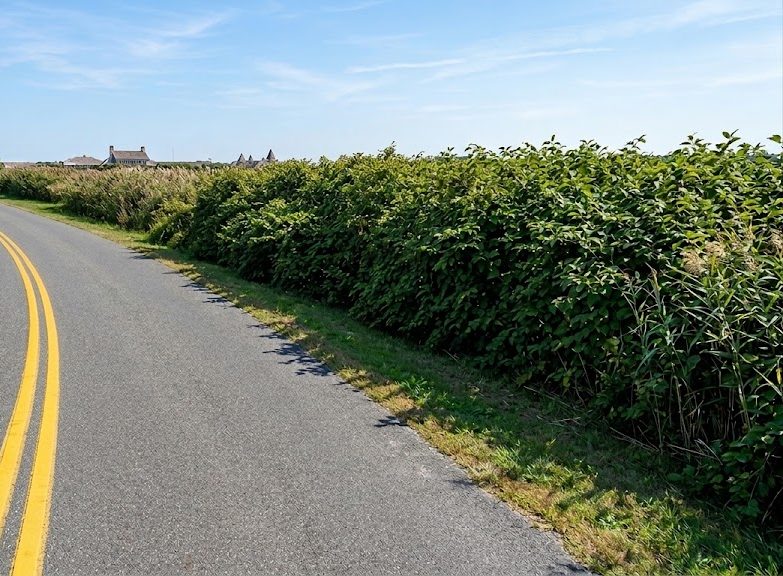
Shoreline was a wall of invasive Japanese’s Knotweed and Phragmites
AFTER
Wetland Restoration
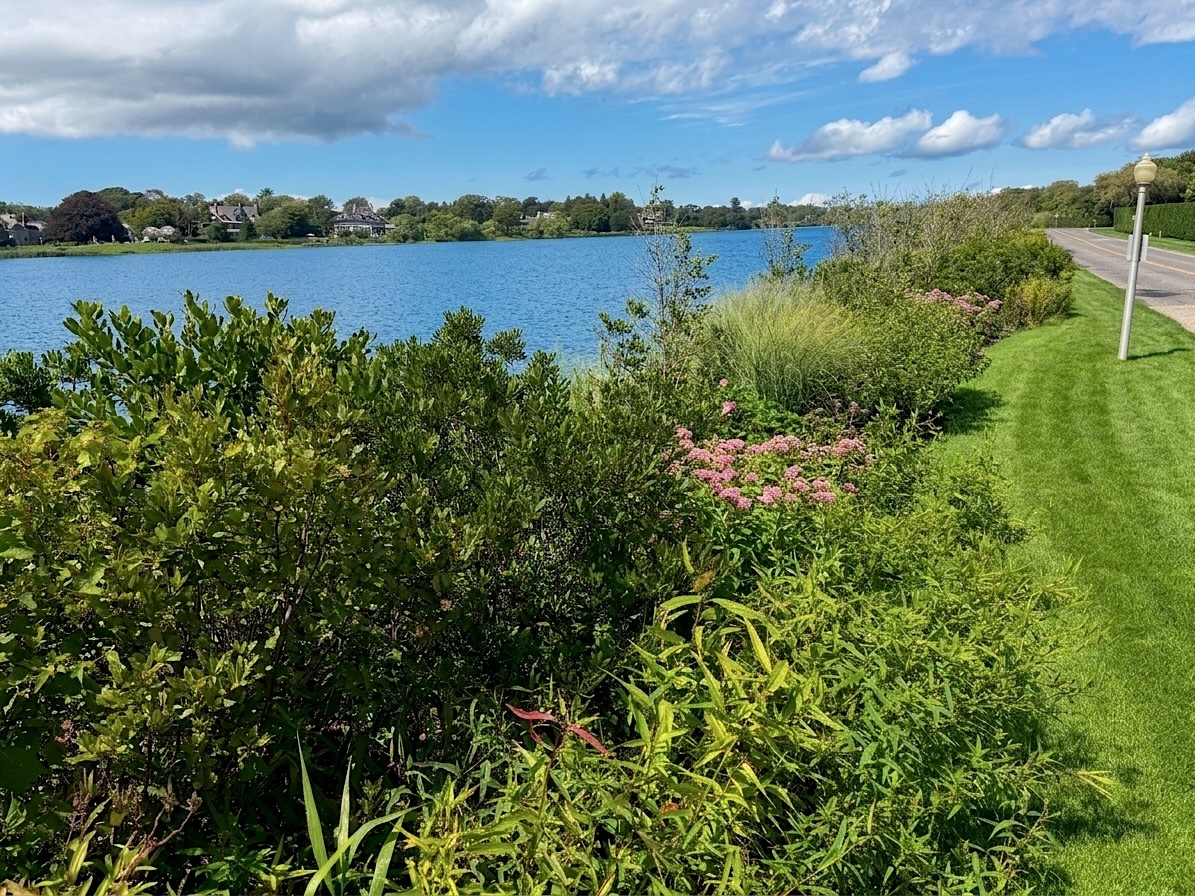
Shoreline is now filled with native plants that cleanse the water and provide a habitat that supports the ecosystem and local food web

Permeable Reactive Barrier Completed and Working
Lake Agawam Conservancy is thrilled to announce the completed installation of three injection wells that are part of a Permeable Reactive Barrier at the north end of Lake Agawam. The PRB intercepts nitrogen from septic systems and road run off that flows directly into the Lake from the Village business district. This PRB represents the culmination of five years of rigorous scientific research carried out by Dr. Christopher Gobler and his team at Stony Brook University’s Clean Water Institute, and hydrogeologists at CDM Smith engineers. Lake Agawam Conservancy partnered with Southampton Town, Southampton Village and the New York State Department of Conservation, contributing $113,700 to the project.
5/1/26

Shoreline Replanting Completed
Over the winter, this 1,000 foot stretch of shoreline has been replanted with gorgeous native vegetation that improves not only Lake Agawam’s water, but all of our groundwater as well. The new plantings are lower, less dense and more effective at filtering and preventing toxic runoff than what was there before. They include Elderberry, Inkberry, Winterberry, Arrowood, American Holly and Shad.
We planted approximately 30.000 wetland species in what looks like a beach along the shoreline. When the Lake fills up, the beach will be submerged and the aquatics will remain visible above the waterline. In addition to cleansing the water, these aquatics will help retain the shoreline and inhibit the regrowth of the invasive Phragmites and Japanese Knotweed. In the spring, we will plant native grasses, fescue, wildflowers and perennials to fill out the wetlands.

Real Time Monitoring Buoy
Real Time Monitoring Buoy
Our real time water quality monitoring buoy was installed last week. Live streamed data can be accessed from the link below.
For a healthy lake, we are seeking for the dissolved oxygen levels to remain high (> 4.8 mg/L; > 70% saturation) and the blue-algae levels to be low (< 10 ug/L). We will also be monitoring changes in temperature and pH which also influence ecosystem and water health. Right now, conditions are looking good — oxygen levels are high and blue-green algae levels are low 💧!
4/22/26
For the past six years, the Conservancy has worked in partnership with the DEC, the Town Trustees, the Town Board and Village Administrations to plant bioswales, encourage sustainable landscape practices and educate homeowners about septic upgrades. In 2024, the Conservancy entered into a stewardship agreement with the Village to plant and maintain bioswales in highly flooded areas throughout the Village. The Gin Lane wetlands restoration project is our most significant contribution to date. Lake Agawam Conservancy raised $700,000 to fund it. It has cost the tax-payers nothing. The restoration was approved by DEC and the Village Board and has been reported on in the Southampton Press.
We are grateful for the partnerships and support we have had along the way. We have worked alongside local environmental leaders including Peconic Environmental Associates, Hollander Design Landscape Architects, Summerhill Landscapes, Aquatic Habitats, Terry Construction and L.K. McLean Associates.
Lake Agawam Conservancy seeks to address the root sources of Lake Agawam’s contamination, restoring water quality throughout Southampton Village.
Contribute to Lake Agawam
We are especially thankful for our community’s ongoing support to reestablish these beautiful native wetlands we can enjoy in the years ahead.
With the passage of Proposition 3, Southampton Village can now install a water filtration system next to Lake Agawam, which will clean three million gallons of polluted Lake water every day. With the passage of Proposition 2, substantial funds are now available to upgrade septic systems.
In partnership with the Stony Brook Center for Clean Water Technology, Southampton Town and the Conservancy, the Village has now installed eight new bioswales thoughout our Village. Each of these steps will purify the Lake and keep our beaches open.
2026 shines bright!
A film about Lake Agawam by Chuck Scarborough